


Sustainability at the Asphalt Institute
We support our members through science-based, transparent, and collaborative initiatives—where the Asphalt Institute delivers practical, tactical solutions for today, and the Asphalt Institute Foundation advances strategic, long-term research for the future.
Data-Driven Sustainability Initiatives
Together, we advance sustainability through tools, forward-looking research, and education that help the industry meet evolving expectations and drive innovation, including life-cycle insights for asphalt binder and Environmental Product Declarations (EPDs).
Holistic Sustainability Approach
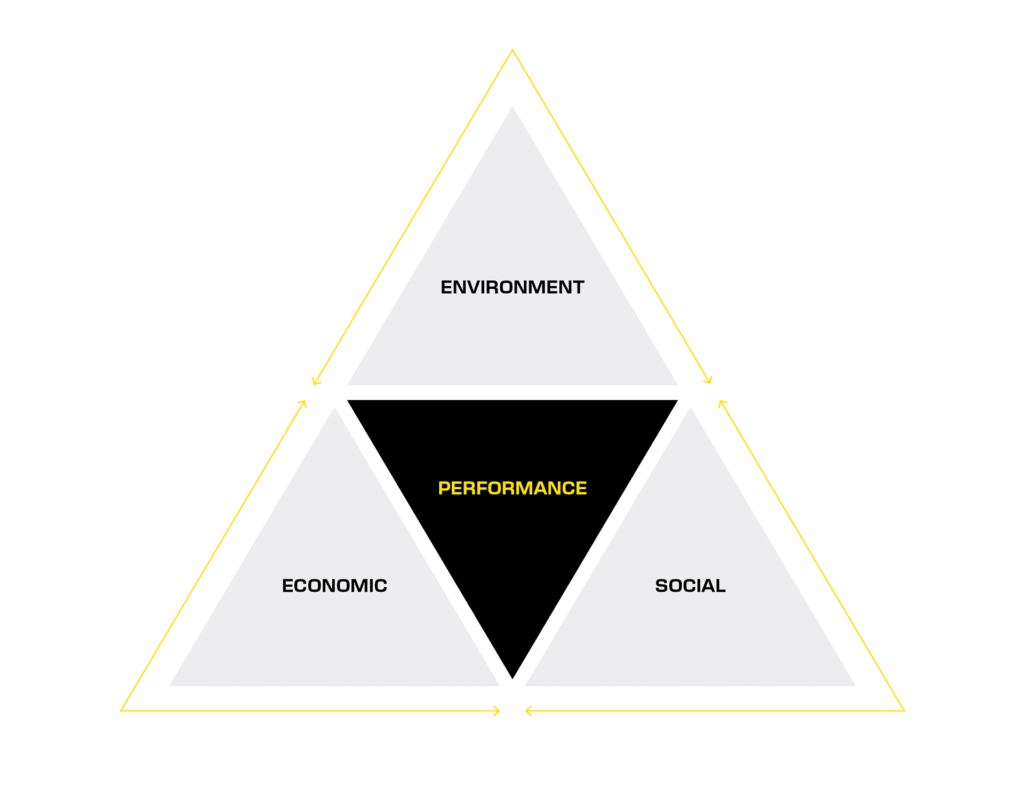
We consider sustainability across the full life cycle of asphalt materials — from raw material extraction to end-of-life — and link environmental performance with long-term pavement performance, economic value and societal benefit.
This holistic view ensures that sustainability efforts maintain the engineering integrity and longevity of asphalt applications while advancing environmental stewardship and smart resource use.
Tactical Sustainability
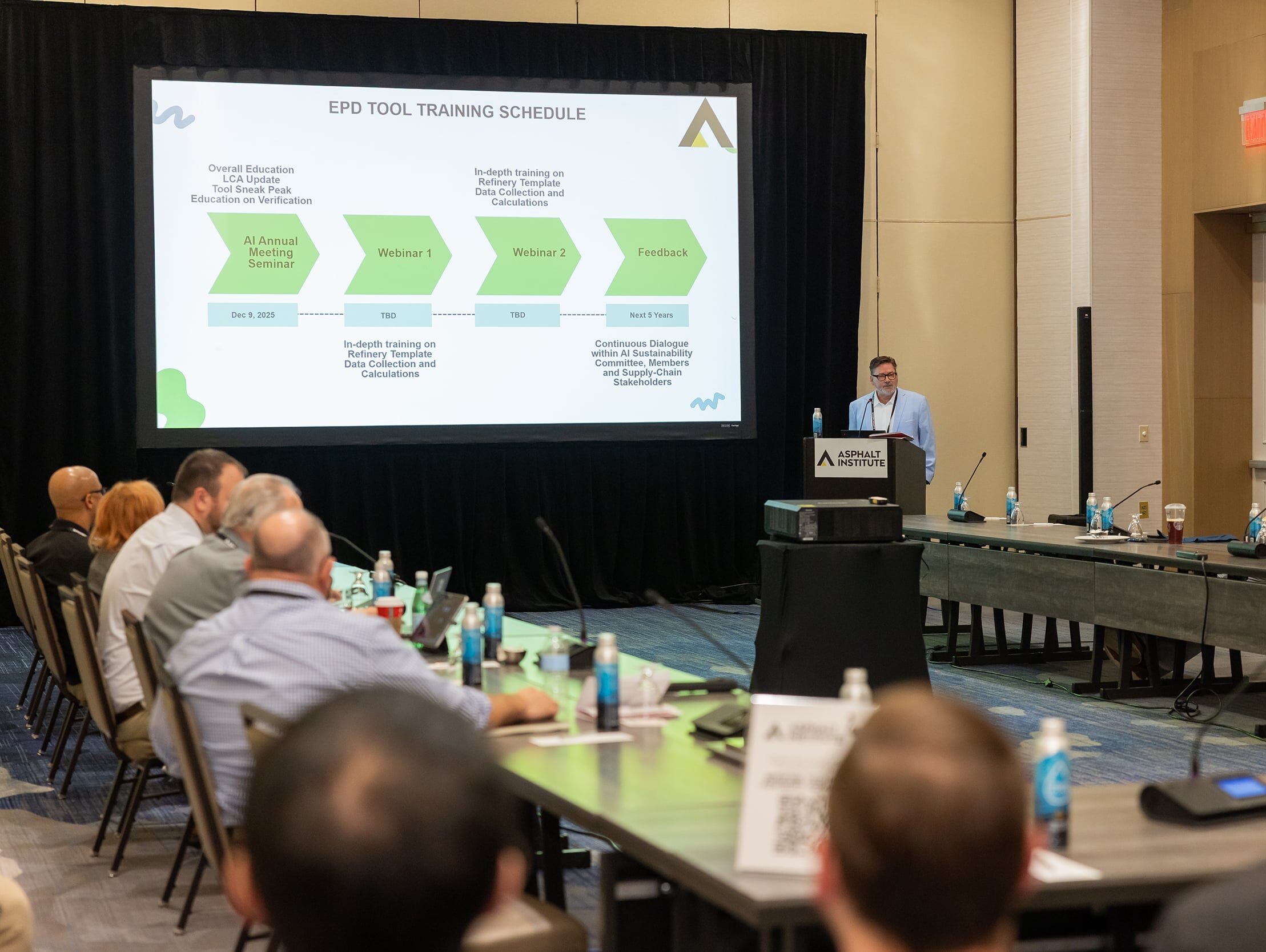
The Asphalt Institute helps members meet emerging green procurement requirements through a dedicated Sustainability Committee that includes members from various sectors of the industry and leads the development of the Environmental Product Declaration (EPD) Tool and Life Cycle Assessment (LCA) update.
Tactical Sustainability Activities
Cradle to Gate LCA Initiative
Industry-led initiative
LCA Report Reviewed and Published
Data used by NAPA, AEMA, ARMA
Program Operator and LCA Consultant
PCR committee — Draft PCR
Sphera — Update LCA model
PCR Published
Valid till March 2030
LCA Update and EPD Tool Available
Enhancing performance and expanding reach
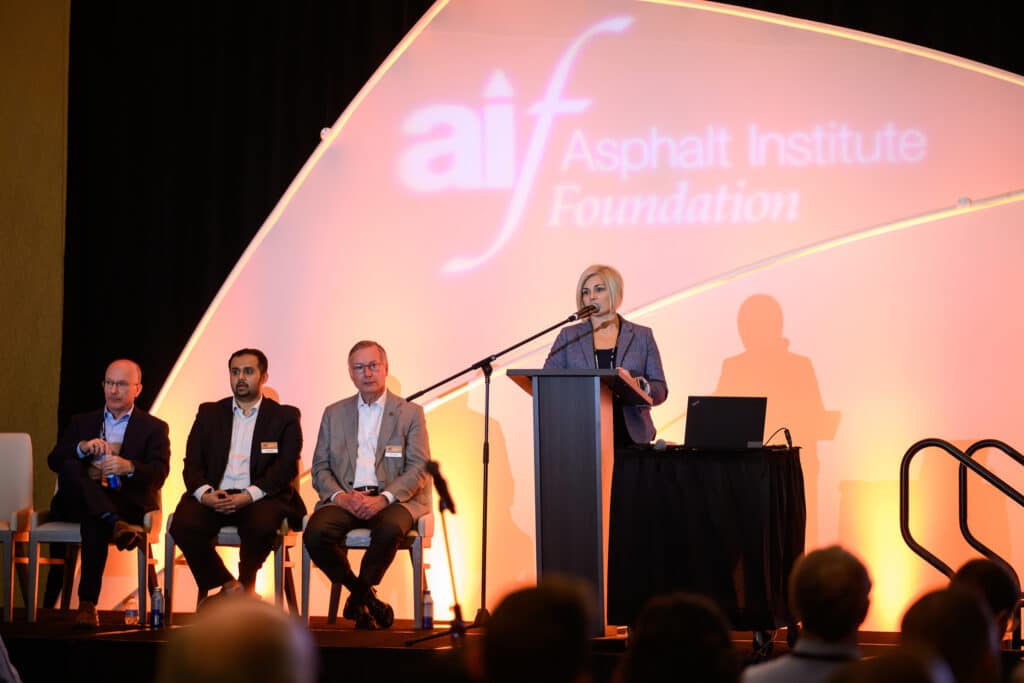
Strategic Sustainability
Long-term sustainability efforts through the Asphalt Institute Foundation focus on ensuring the continued resilience of the asphalt binder industry for the coming decades.
Strategic Sustainability Activities
Completed Projects
Service Life Study
Alternative Feedstock Study
Future Projects
- Potential Upstream Industry Collaboration
- Potential Downstream Innovation Projects